Introduction
Every building, whether residential, commercial, or industrial, experiences wear and tear over time. Weather conditions, aging materials, foundation movement, and daily use can gradually weaken structural components. While many of these issues begin as minor defects, they can quickly develop into major structural problems if left unaddressed.
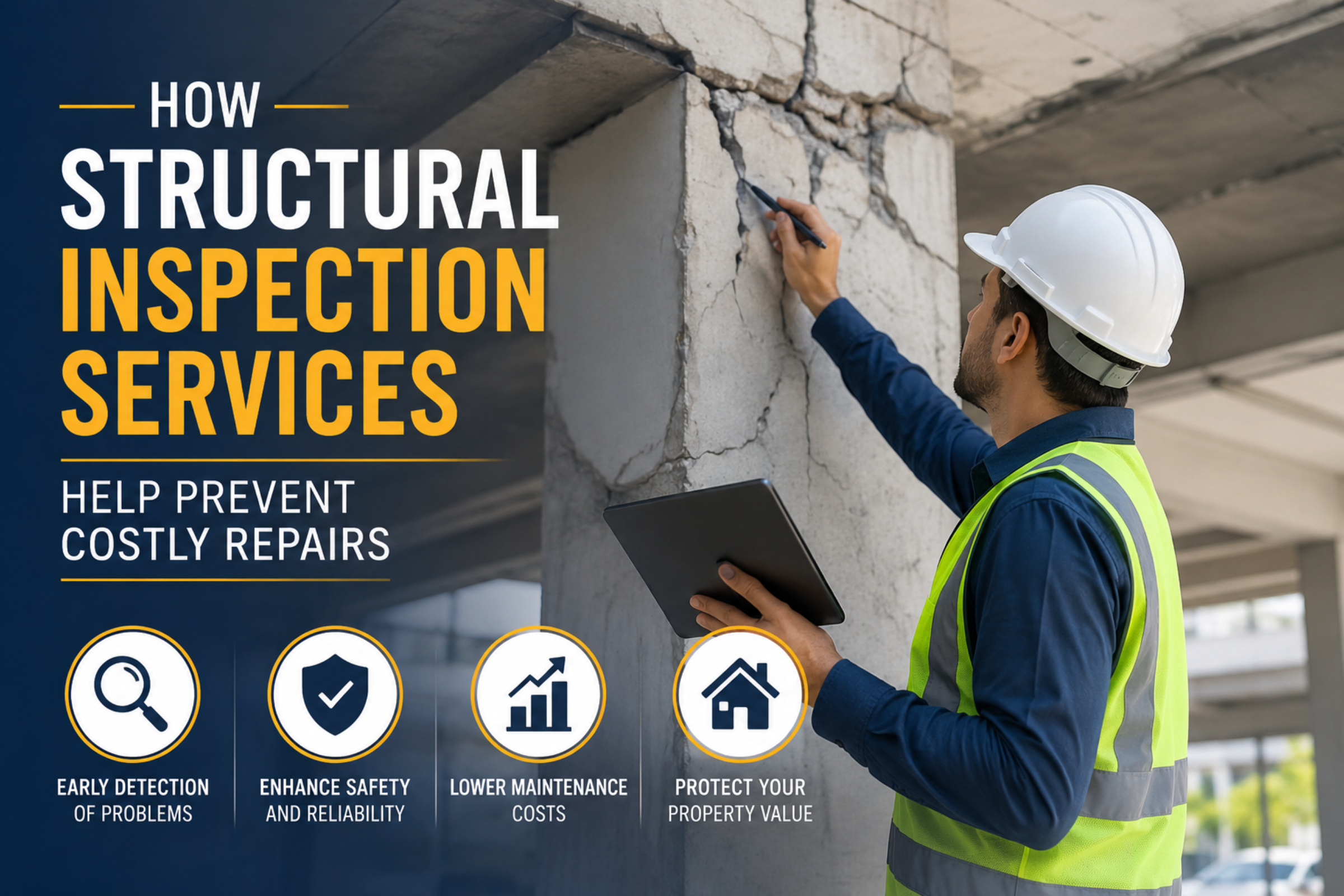
Structural inspection services play a crucial role in identifying these hidden issues before they become expensive repairs. By evaluating the condition of a building’s structural elements, professional inspectors help property owners make informed maintenance decisions, extend the lifespan of their buildings, and protect occupants from potential safety hazards.
In this article, we’ll explore how structural inspection services help prevent costly repairs and why regular inspections are a smart investment for every property owner.
What Are Structural Inspection Services?
Structural inspection services involve a detailed assessment of a building’s structural integrity. Licensed structural engineers or qualified inspectors examine critical components such as:
- Foundations
- Load-bearing walls
- Beams and columns
- Roof structures
- Floors and slabs
- Concrete and steel elements
- Masonry structures
The goal is to identify defects, structural movement, deterioration, or damage that could compromise the building’s safety or performance.
Why Early Detection Matters
Most structural failures don’t happen overnight. Small problems usually develop over months or years before becoming serious.
Examples include:
- Minor foundation settlement leading to major wall cracks
- Small roof leaks causing timber decay
- Rusting steel reinforcement weakening concrete structures
- Water intrusion damaging load-bearing walls
Early detection allows these issues to be repaired while they are still manageable and affordable.
Common Structural Problems Found During Inspections
Professional structural inspections often uncover issues that property owners may overlook, including:
Foundation Cracks
Cracks in foundations may indicate soil movement, settlement, or water damage. Repairing small cracks early is significantly less expensive than correcting major foundation failure.
Water Damage
Moisture weakens wood, corrodes steel, and deteriorates concrete. Inspectors identify water intrusion before it causes widespread structural deterioration.
Roof Structural Issues
Sagging roofs, damaged trusses, or weakened support beams can eventually lead to roof collapse if ignored.
Concrete Deterioration
Concrete may develop cracks, spalling, or exposed reinforcement due to weather, corrosion, or poor construction practices.
Structural Movement
Uneven floors, sticking doors, and widening wall cracks often indicate structural movement that requires professional evaluation.
How Structural Inspections Save Money
Prevent Major Structural Repairs
Addressing minor defects early prevents them from becoming expensive reconstruction projects.
For example:
- Repairing a small crack may cost a few hundred dollars.
- Replacing a damaged foundation could cost tens of thousands.
Routine inspections help identify problems before repair costs escalate.
Reduce Emergency Repair Costs
Unexpected structural failures often require emergency contractors, temporary building closures, and urgent repairs.
Regular inspections reduce the likelihood of sudden failures by identifying risks in advance.
Extend Building Lifespan
Buildings that receive routine inspections and timely maintenance typically last much longer than neglected structures.
Replacing damaged components early helps preserve the overall integrity of the building.
Lower Long-Term Maintenance Expenses
Preventive maintenance is almost always less expensive than reactive repairs.
Inspection reports help property owners prioritize maintenance activities and budget effectively.
Improve Occupant Safety
Structural damage doesn’t only affect property—it can endanger lives.
Inspections help identify hazards such as:
- Weak support beams
- Unstable foundations
- Deteriorated balconies
- Damaged retaining walls
- Roof instability
Correcting these issues improves the safety of occupants, employees, customers, and visitors.
Protect Property Value
A well-maintained building retains its market value.
Whether selling, leasing, or refinancing a property, recent structural inspection reports provide buyers and lenders with confidence that the building is structurally sound.
Ignoring structural issues often leads to:
- Reduced property value
- Difficult negotiations
- Lower buyer confidence
- Costly repair requests during property transactions
Support Insurance and Compliance Requirements
Many insurance companies and regulatory authorities require structural assessments following:
- Storm damage
- Flooding
- Earthquakes
- Fire incidents
- Significant building alterations
Professional inspection reports help support insurance claims and demonstrate compliance with local building regulations.
When Should You Schedule a Structural Inspection?
Property owners should consider scheduling structural inspections:
- Before purchasing a property
- After natural disasters
- When visible cracks appear
- Before major renovations
- If floors become uneven
- When doors or windows suddenly stop closing properly
- Every few years for older buildings
- Before selling commercial properties
Routine inspections help identify problems before they become emergencies.
Choosing a Qualified Structural Inspection Service
When selecting a structural inspection provider, consider:
- Licensed structural engineers
- Relevant industry experience
- Comprehensive inspection reports
- Use of modern inspection equipment
- Knowledge of local building codes
- Strong customer reviews and references
Choosing an experienced inspection company ensures accurate assessments and practical repair recommendations.
Conclusion
Structural inspection services are one of the most effective ways to protect your property from expensive repairs and unexpected structural failures. By identifying small issues before they escalate, inspections help reduce maintenance costs, improve building safety, extend structural lifespan, and preserve property value.
Whether you own a home, office building, warehouse, or industrial facility, investing in regular structural inspections is a proactive strategy that saves money in the long run. Rather than waiting for visible damage or costly emergencies, schedule routine inspections to ensure your building remains safe, compliant, and structurally sound for years to come.